Old Sport, New Rules.
There is a reason why certain disciplines persist long after the world has moved on. Skiing, tennis, sailing, equestrian. These are not simply games. They are languages. Ancient, refined, and built upon an unspoken understanding of respect. They require patience, an appreciation for form, and a willingness to be humbled by nature.
In an era defined by relentless acceleration, the "old sports" offer something profoundly countercultural: the necessity of presence. You cannot check your emails while navigating a yacht through unpredictable waters. You cannot halfway commit to a ski descent. The mountain, the sea, the court, the field—these environments demand a totality of focus that modern life rarely allows.
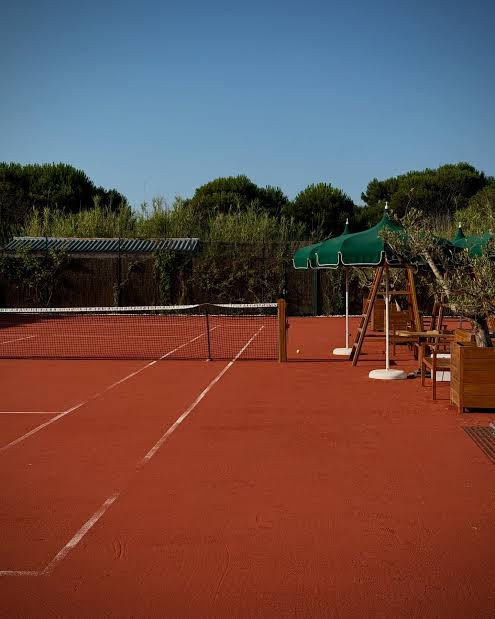
This is precisely why these disciplines have become the preferred milieu for a certain kind of modern leader. Those who navigate high-stakes environments all day often seek their counterbalance in activities that cannot be hacked, optimised, or delegated. The old sports are immune to the shortcuts of the digital age. They enforce a standard of mastery that is earned, not bought.
When we speak of "Old Money" or "Quiet Luxury," we are often speaking of this exact ethos. It is an aesthetic, yes, but it is primarily a behaviour. It is the understanding that true excellence does not need to announce itself. The serve that looks effortless because it has been struck ten thousand times. The quiet confidence of a rider in perfect sync with their horse. These are the markers of a world that values substance over spectacle.
The old rules of sport teach a modern lesson in trust. You learn quickly who can be relied upon when the weather turns, or when the stakes are raised. Character is revealed not in the boardroom, but on the powder, on the waves, and in the saddle.
This is the foundation of TMS. We do not gather merely to socialise; we gather around shared disciplines that act as a filter for character. When you play a match, or share a boat, you learn more about a person's nature in an afternoon than you would in a year of meetings. You learn how they handle failure, how they celebrate success, and whether they possess the grace to make those around them feel included.

The new rules of networking are, in fact, the return to these old rules. The most valuable connections are no longer made in fluorescent-lit conference halls, but in environments where people are fully alive. We are returning to a model where trust is built through shared experience and physical presence, rather than curated profiles.
The Moving Society is built on this principle. We bring together individuals who understand that the way one plays is the way one lives. Individuals who appreciate that the deepest connections are forged not in the abstract, but in the shared pursuit of excellence.